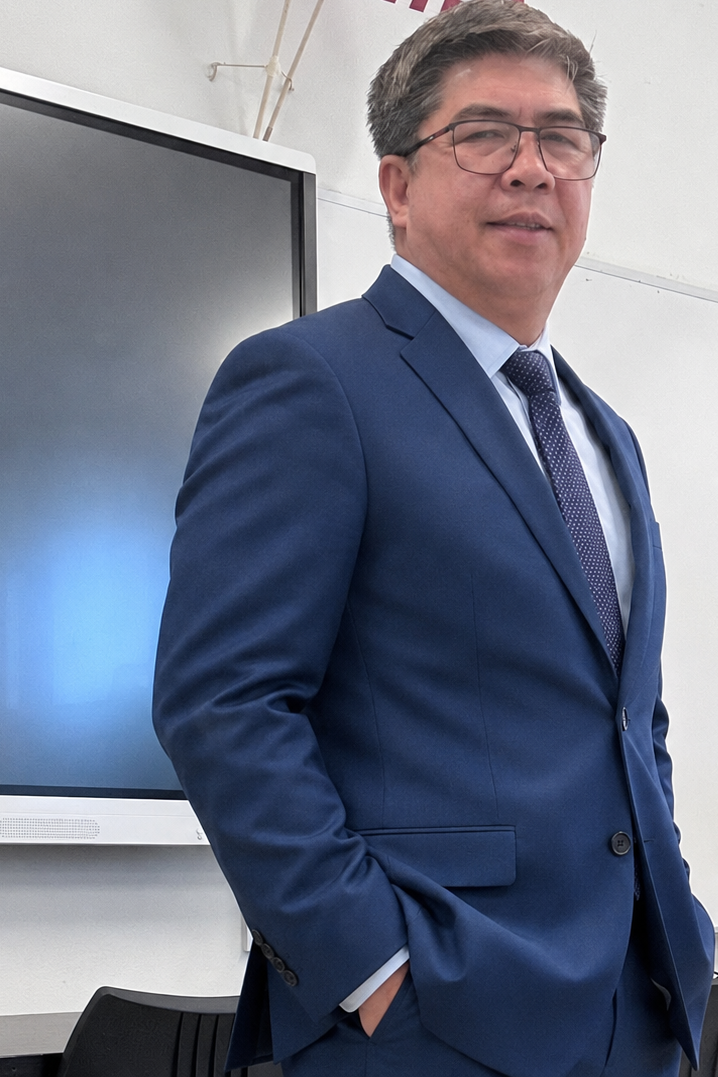
Author: ARNEIL DEFENSOR ARO, MAEd, Mathematics Educator and Educational Leader Mathematics Team Leader, Bayanihan Teachers™
Published On: 2026-10-04
Philippine mathematics education is at a consequential point. National learning-recovery measures have produced measurable gains, yet large numbers of learners remain below expected mathematics proficiency, particularly at the secondary level. The appropriate policy response is therefore not to choose between remediation and classroom improvement, but to connect them: stronger mathematics teaching, disciplined assessment, targeted intervention, sustained teacher professional development, and school-based professional collaboration must operate as one system.
This white paper proposes a Philippine-centered framework for that system. It builds on Arneil Defensor Aro's 2017 research, “A Model of an Outstanding Mathematics Teacher,” which examined outstanding mathematics teachers in the Schools Division of Valenzuela City and identified a pattern of professional practice that extended beyond content delivery to research, mentoring, reflective adaptation, collaboration, critical-thinking development, and standards-based assessment. [1] The proposed training module, Advancing Secondary School Mathematics Education through Specialized Teacher Training Workshops, translates those characteristics into a practical professional-learning structure emphasizing advanced mathematical concepts, innovative teaching methodologies, support for diverse learners, and communities of practice.
The proposal is closely aligned with current Philippine law and policy. Republic Act No. 12028 expressly establishes a national intervention program for learners who struggle in reading, mathematics, and science. [2] DepEd's May 2026 national update reported that learners identified as not or low proficient in mathematics fell from about 13 million to 6.8 million during School Year 2025–2026, while also acknowledging the need to sustain progress in the secondary grades. [3] EDCOM II has independently described the learning crisis as a systemic national challenge requiring reform of both foundational learning and the education workforce. [4]
The central policy conclusion is straightforward: a disciplined teacher-capacity model led by an experienced Filipino mathematics educator can complement—not replace—DepEd programs by giving teachers usable instructional tools, collaborative structures, mentoring pathways, and measurable implementation routines. Implemented through Bayanihan Teachers™ and adapted to Philippine policies and school contexts, the initiative can operate through webinars, regional workshops, Learning Action Cells, mentoring, train-the-trainer activities, action research, and annual evaluation. Its intended outcome is sustainable local capacity: participant → practitioner → peer mentor → facilitator → local trainer → replication leader.
[1]Arneil Defensor Aro, “A Model of an Outstanding Mathematics Teacher,” research manuscript, 2017, Academia.edu, https://www.academia.edu/101460395/A_MODEL_OF_AN_OUTSTANDING_MATHEMATICS_TEACHER.
[2] Republic of the Philippines, Republic Act No. 12028, “Academic Recovery and Accessible Learning (ARAL) Program Act,” October 16, 2024, https://lawphil.net/statutes/repacts/ra2024/ra_12028_2024.html.
[3] Department of Education, “DepEd, Nagtala ng Pag-angatsa Literacy at Numeracy sa Buong Bansa,” May 6, 2026, https://www.deped.gov.ph/2026/05/06/deped-nagtala-ng-pag-angat-sa-literacy-at-numeracy-sa-buong-bansa/.
[4] Second Congressional Commission on Education (EDCOM II), “Fixing the Foundations of PH Education System Critical to Overcoming Learning Crisis—EDCOM Year Two Report,” January 27, 2025, https://edcom2.gov.ph/fixing-the-foundations-of-ph-education-system-critical-to-overcoming-learning-crisis-edcom-year-two-report/.
9
2026
1
Research Article






2/11, SASTRI NAGAR, KOYEMBEDU, CHENNAI-600107
9488577176
editor@irjweb.com, connectirj@gmail.com

This work is licensed under a Creative Commons Attribution 4.0 International License
Copyrights © IRJEdT. All Rights Reserved.


